
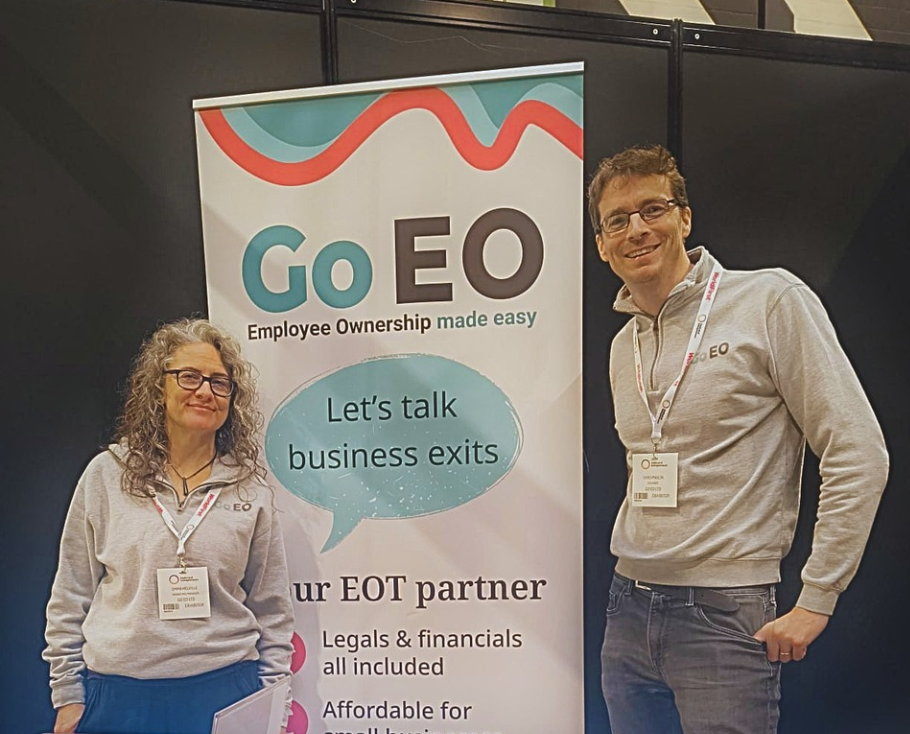
Earlier this month we exhibited at the Festival of Entrepreneurs at the NEC in Birmingham, sharing a stand with Dr Shelley Poole, founder of Wellington HR. Over the two days we talked to people about employee ownership. We were surprised how many people had heard of Employee Ownership Trusts (EOTs). But there were some common misconceptions that kept coming up.
Myth 1: An EOT isn't really a way to sell
Many people at the show didn't realise an EOT is a way to sell your business. It sits alongside a trade sale, a management buyout and private equity as one of your options.
"You get fair market value, paid over time from the company's profits," says Chris. "You can step back gradually, and the business you built carries on in the hands of the people who helped you build it. There are tax advantages too, for you and your team."
Find out more about how an EOT works, or see how an EOT compares to other exit plans.
Myth 2: Employee-owned businesses decide everything by consensus
This one came up on stage, during a panel on building a culture people want to join. During the lively discussion, the moderator suggested that employee-owned businesses make decisions by consensus, so nothing happens quickly and they don't grow. When a fellow panellist struggled to answer, Shelley, who was on the panel, stepped in.
"Wellington HR still runs like any other business," she said. "The leadership team makes the decisions and sets the direction. What's changed is that everyone has a stake in the outcome."
Employees don't vote on every decision. The leadership team runs the business, but employees have a voice. The evidence backs up Shelley. The Employee Ownership Association's People Powered Growth report found that employee-owned businesses are 50% more likely to grow their workforce than other businesses.
Myth 3: EOTs are for big businesses
When people think of employee ownership, they tend to think of John Lewis. Few expected it to work for a business with a team of 10.
"Go EO has created a streamlined transaction process that makes an EOT viable for small businesses," says Chris Maslin, founder of Go EO. "Most of our clients have turnover under £2m. Being small isn't a barrier."
Wellington HR is a good example. Shelley sold her business to an EOT in 2024, making her team of six employee owners. You can use our free tool to check whether your business fits the criteria in a couple of minutes.
Find out if an EOT could suit you
Our EOT Explorer takes you through three key areas to help you find out if selling to an employee ownership trust (EOT) is a realistic option for you and your business.

Thinking about an EOT? We'll help you work out the right next step.
Book my free video call with Chris
We always respond within 24 hours.